How it works
One reflection, start to finish.
Every reflection in RAMA REFLECT runs through the same five steps. Below is what each one asks of you, and why it is there. A full pass takes a few minutes.
Notice
Read what happened. Only what is written is established.
A short fictional situation, two or three sentences long. No history, no motive, no hint about who is right. The first move is simply to read it without filling the gaps.
Separate
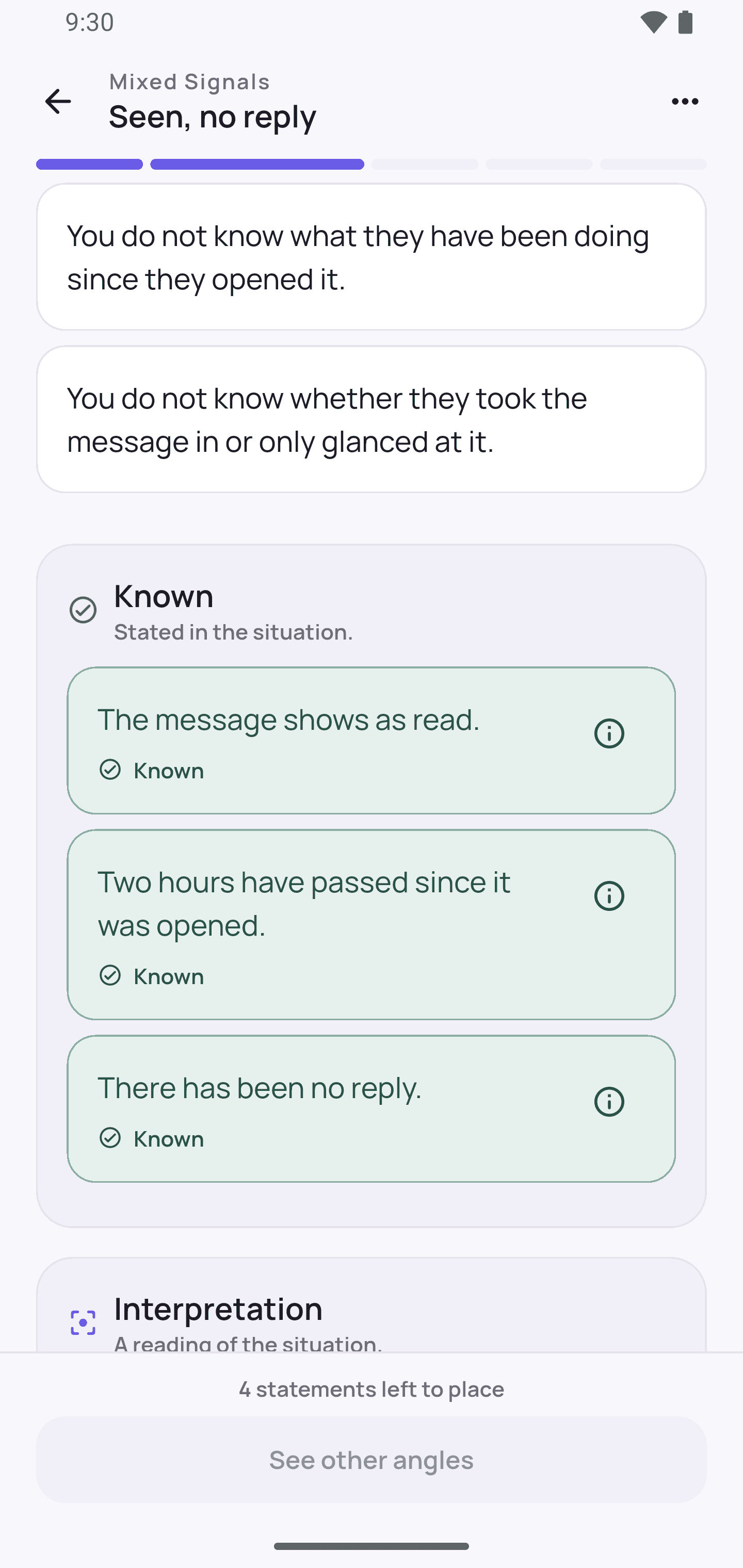
Sort each detail into what you know, what you are reading in, and what is missing.
Cards from the situation go into three trays. Place one differently from the way it was authored and the app explains the distinction rather than marking you wrong.
Expand
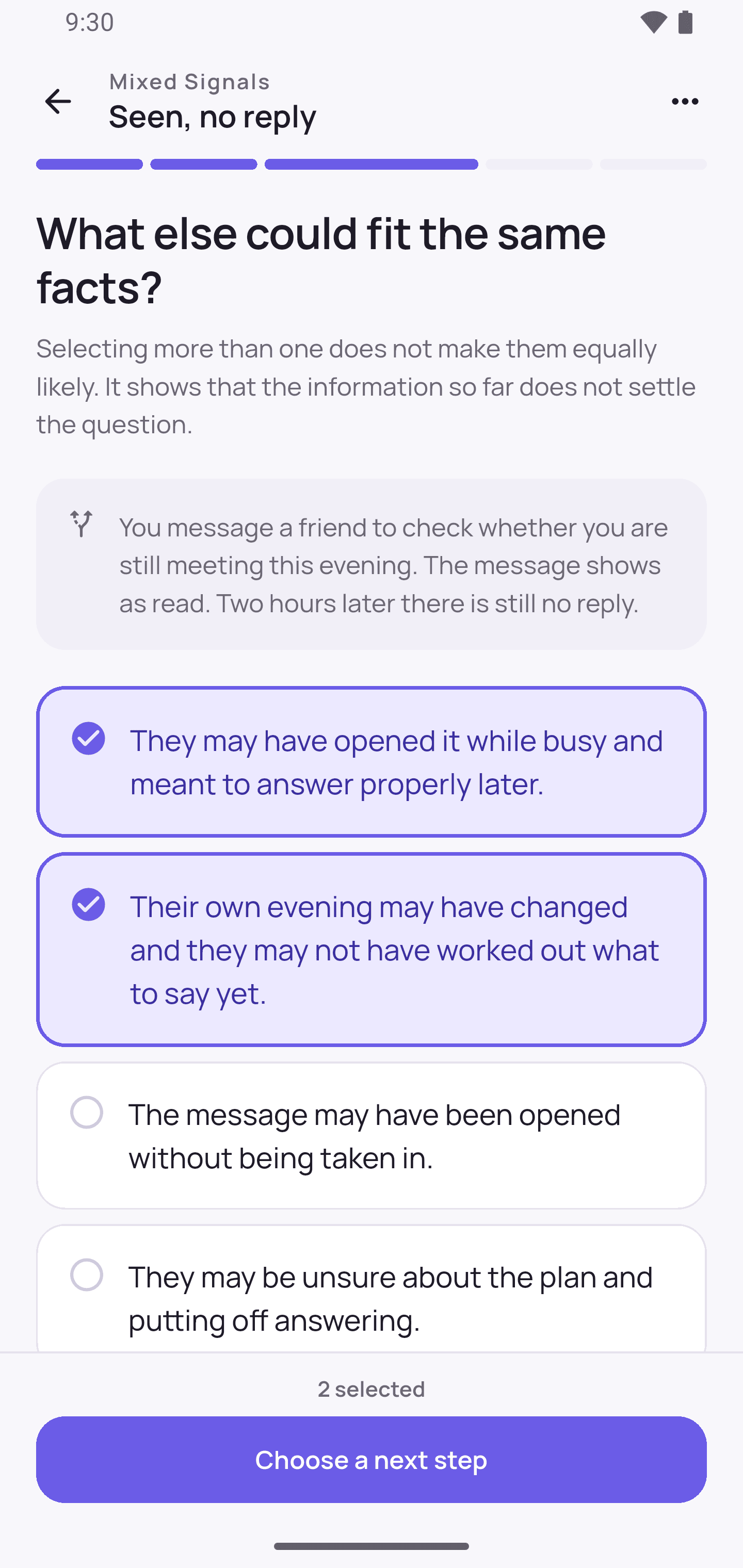
Consider other readings that fit the very same facts.
Several plausible explanations, none of them presented as the truth. The point is not to find the right one — it is to notice that more than one survives the evidence.
Choose
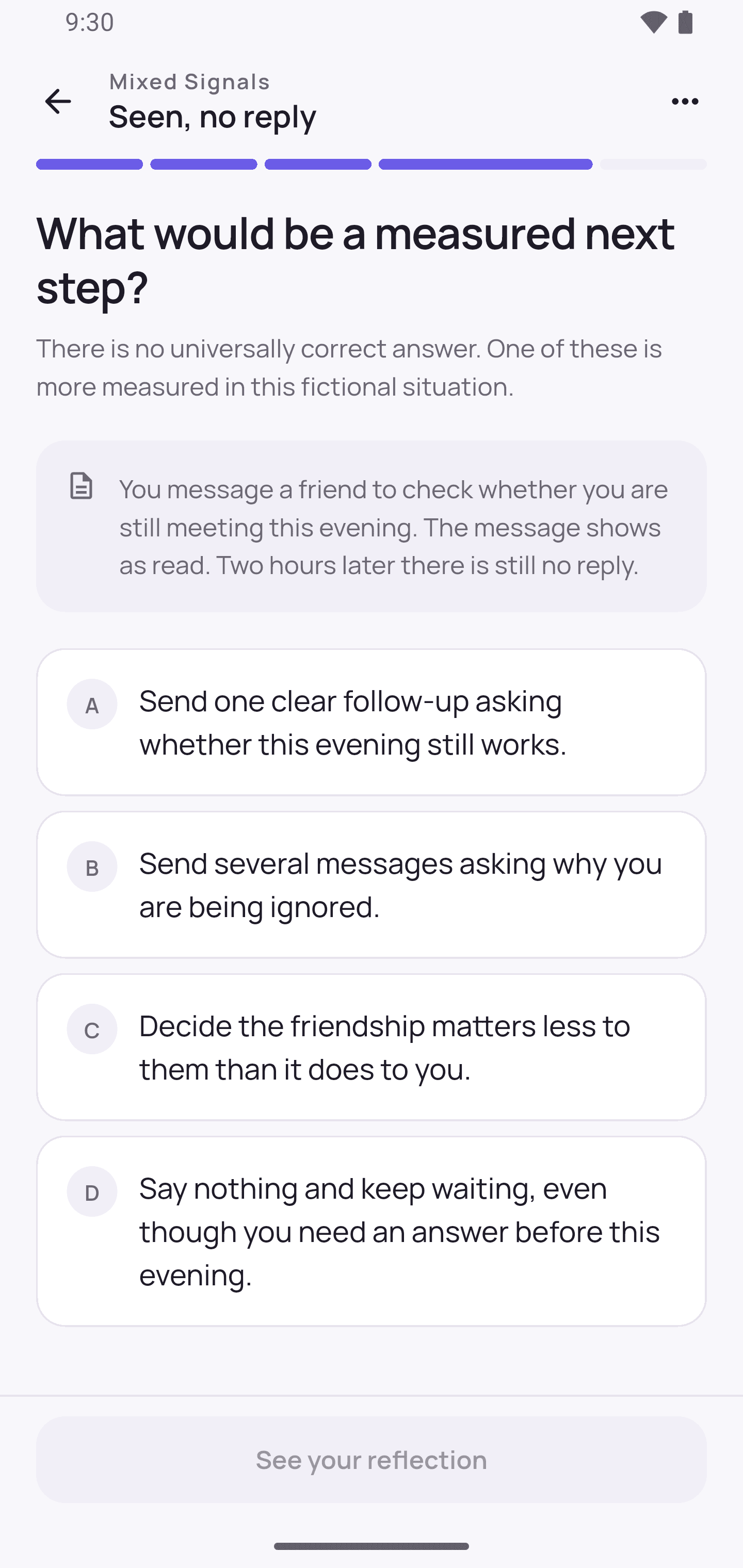
Pick a next step, and see what that kind of step tends to do.
Authored options: ask, wait, assume, withdraw, state something plainly. Each is described in terms of what it typically opens or closes, not scored.
Review
Close with one short practice principle you can keep.
A single sentence to carry into the next real conversation. Save it if it is useful. There is no score, no profile and nothing to compare against.
Why it is built this way.
- The situations are fictional.
- Practising on somebody else’s ambiguous message is easier than practising on your own, because you can afford to be wrong. The habit is what transfers, not the specific situation.
- There is no right answer to score.
- Place a card differently from the way it was authored and the app explains the distinction it was drawing. It does not mark you wrong, and it does not keep a tally.
- Nothing is written about you.
- There is no free-text field anywhere in the app. It records which authored option you selected, and nothing else.
- No profile is inferred.
- Your choices are not analysed, scored or turned into a personality type. Progress records what you practised, not what kind of person you are.
- You can stop mid-way.
- An interrupted reflection resumes at the exact step you left, because a practice app that punishes interruption is not much of a practice app.
That is the whole method.
Thirty-six situations, one shape, and no score at the end of any of them.